 5 minWalking1968
B98: classic European cartoons, from Leopold the Cat, The Adventures of the Mole and Barbapapa to Dogtanian and the Three Muskehounds, Around the World with Willy Fog and the shorts of Soyuzmultfilm, and where to watch them
150 cartoons from 1938 to 2026: 111 films and shorts and 39 series, chosen for the whole household.
Cartoons
More »5 minWalking1968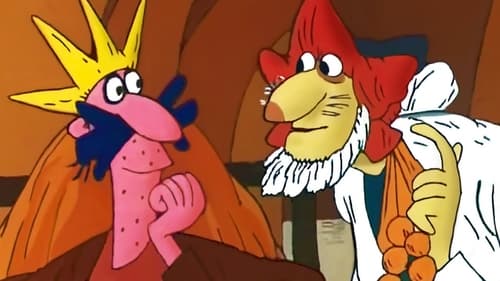 10 minWho Will Tell A Fable?1982
 8 minI Give You a Star1974
 10 minLittle Stomper1964
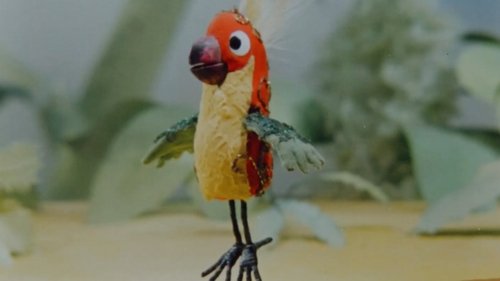 10 minAnd What if It Works!1978
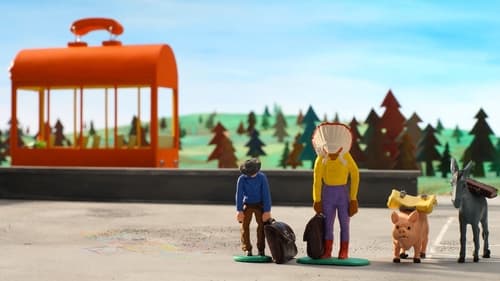 27 minA Town Called Panic: Back to School Panic!2016
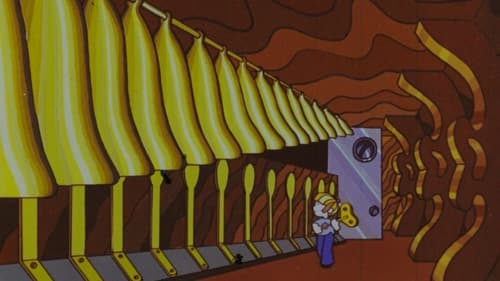 10 minA Box With Secret1976
 9 minBall of Wool1968
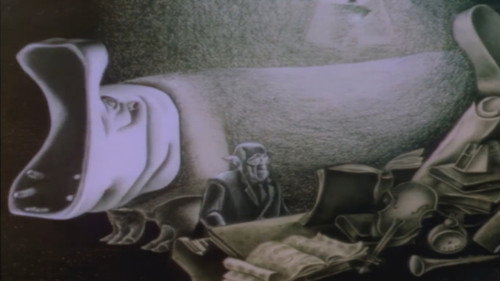 3 minA Teacher of Singing1968
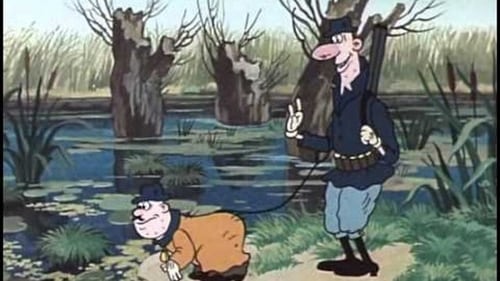 9 minFoontic and the Detectives1986
 61 minMaya, Give Me a Title2024
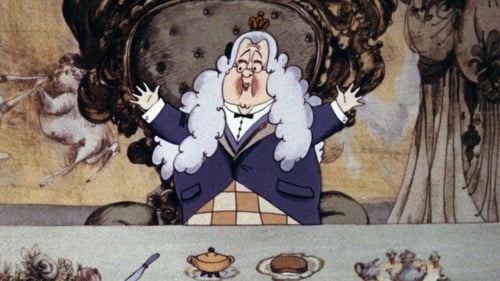 10 minThe King's Sandwich1985
Series
More »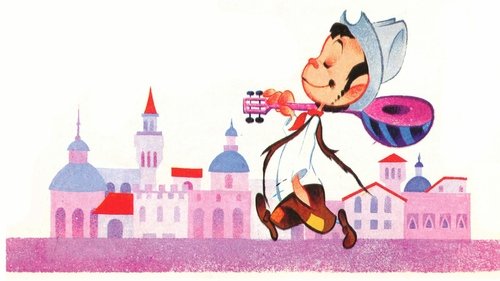 53 episodes
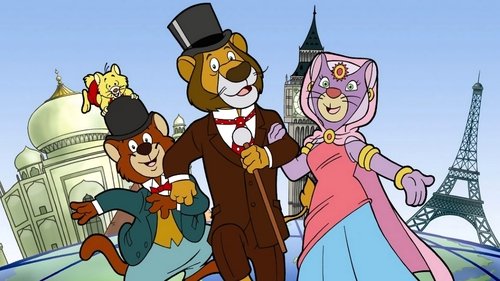 26 episodes
 26 episodes
 49 episodes
 26 episodes
 11 episodes
 100 episodes
 78 episodes
Soviet classics
More »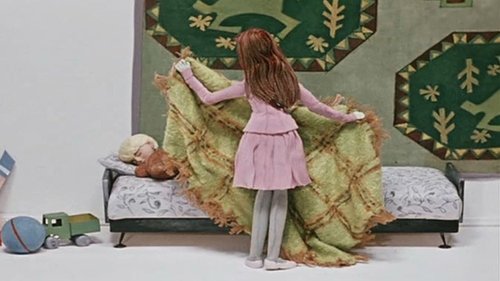 10 min
 10 min
 10 min
 2 min
2 min 27 min
 4 min
4 min 21 min
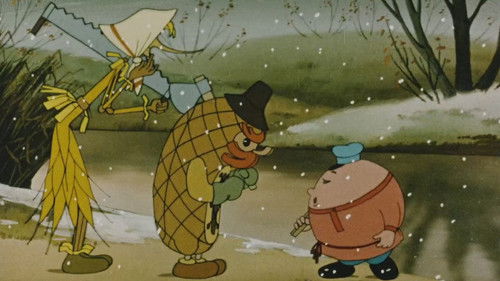 10 min
From France
More » 3 episodes
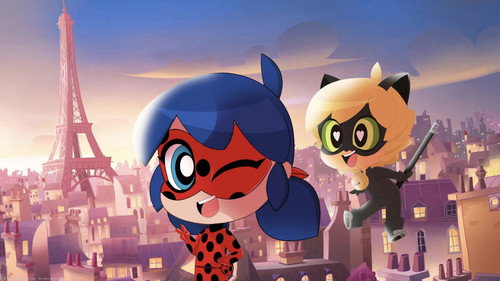 62 episodes
 26 min
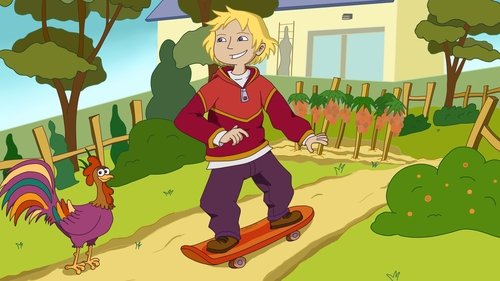 52 episodes
From Prague and Budapest
More » 8 min
8 min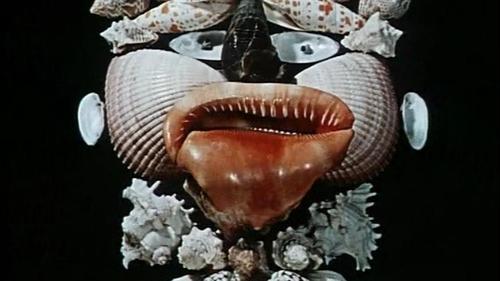 9 min
9 min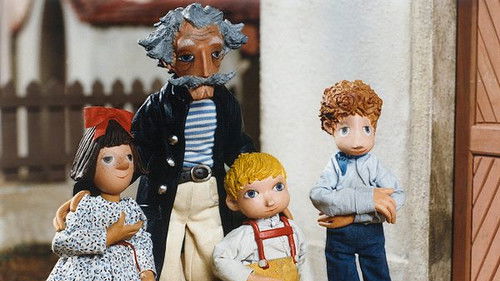 26 episodes
 13 episodes
New cartoons
More » 2025
2025 85 min
 63 min
 51 min
Classic European cartoons for the whole household: the B98 guide
B98: classic European cartoons, from Leopold the Cat, The Adventures of the Mole and Barbapapa to Dogtanian and the Three Muskehounds, Around the World with Willy Fog and the shorts of Soyuzmultfilm
Ask a grandmother in Prague, Moscow, Paris or Madrid which cartoon she watched as a child, and she will name one that her grandchildren know too. A small mole in search of a pair of trousers; a polite cat in a bow tie who only wants to live in peace with two mice; a pink creature who can take any shape; a brave young dog who rides to Paris to join the king's guard. The cartoons of Europe were made for the most part by small studios paid for from public funds, by artists who were given time, and the best of them have been shown year after year for half a century and more. B98 is a guide to 150 of these cartoons, made between 1938 and 2026: 111 films and short films and 39 series. Each has its own page, with its story, its year and studio, and a Watch now button that leads to the official services carrying it in your country.
The catalogue has been chosen for the whole household. Every title was read through by hand, and the selection keeps to films made for children and families: fairy tales, animal stories, comedies, adventure serials and a small number of poetic short films that adults will enjoy as much as children. Animated films made for adult audiences, of which Europe has many, were left out, together with propaganda pieces from the older studios.
About two thirds of the collection comes from the studios of the former Soviet Union, above all Soyuzmultfilm in Moscow, which was for decades the largest animation studio in Europe. The rest comes from Czechoslovakia, France, Belgium, Spain, Germany, Italy and Hungary. This guide explains the studios and their styles, walks through each list, suggests a first month of viewing, and ends with questions and answers. Every cartoon named here has a page on B98, and a click on its title opens that page.
How the collection is arranged
The home page shows wide stills, four to a row, each with its title in red beneath and a small black label giving its length in minutes or its number of episodes. The first rows show the most popular short films and series. Then come rows for the Soviet classics, for France, and for Prague and Budapest, and a row of new cartoons. The yellow header holds the search box, and the menu bar beneath it leads to Cartoons, which lists the films and shorts; to Series; to Studios, which opens every list; to the Soviet classics; and to the A to Z index.
By period, 19 cartoons date from before 1960, 15 from the 1960s, 33 from the 1970s, 38 from the 1980s, 16 from 1990 to 2009 and 29 from 2010 onwards. By kind, 90 are short films of thirty minutes or less, and many of those last only ten minutes, the length of a reel; 48 are fairy tales; 74 have animals as their heroes; and 21 were made to teach something, from the alphabet to the laws of Archimedes.
The short film is the natural form of the cartoon, and it suits family life. Ten minutes is a story before bed. Three or four shorts make an evening in which everybody chooses one. And because so many of the older films use music and movement more than speech, they cross the borders of language easily; a child in any country can follow the mole, the hippo who is afraid of his injection, or the bear cub who stays awake through the winter.
Soyuzmultfilm
Soyuzmultfilm was founded in Moscow in 1936, and 63 cartoons on B98 carry its name. In its first years it drew in the round, bouncing style that was then admired everywhere, and two films of 1938 show it: The Three Musketeers, an early work by Ivan Ivanov-Vano, who was to direct for half a century and is remembered as the father of Russian animation, and Cat House, from the verse play by Samuil Marshak about a proud cat whose fine house burns down and who is taken in by the two poor kittens she once turned away. Telephone, from 1944, brings the children's poet Korney Chukovsky himself to the screen, answering call after call from an elephant, a crocodile and a herd of gazelles.
After the war the studio turned to the folk tale and to a rich, careful, painterly manner. The Miraculous Bell, by the sisters Valentina and Zinaida Brumberg, is a Russian tale of a kind daughter and an unkind one. Someone Else's Voice is a fable about a magpie who comes home from her travels with a new way of singing. Fear Has Big Eyes and The Stork are folk stories, the second from Uzbekistan. A Hazel Tree Twig is a Romanian tale of a girl who sets out to rescue her brother, and Dog and Cat, directed by Lev Atamanov from an Armenian verse fable, explains with great charm why the two animals have been on bad terms ever since a certain tailor failed to deliver a certain hat. A Naughty Kitten and Flight to the Moon, both from 1953, show the studio's craft at its most polished: the second sends a schoolboy into space eight years before the first cosmonaut.
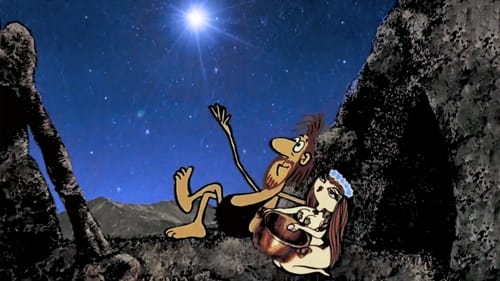
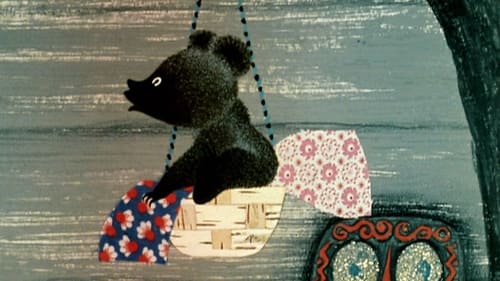
The great change came at the start of the 1960s, when a group of younger directors, led by Fyodor Khitruk, threw out the old realism in favour of flat colour, bold shapes and modern wit. Khitruk's Little Stomper, from 1964, is a perfect film for small children. A bear cub who refuses to go to sleep for the winter slips out of the den, sees snow for the first time, and makes friends with a young hare; the animals look as though they had been painted with a soft wet brush, after the style of a much loved illustrator of picture books. His I Give You a Star, ten years later, is a comedy for the grown-ups in the room, following one couple from the Stone Age to the space age, and it was honoured at Cannes.
Roman Kachanov, the master of puppet films, is represented by The Last Petal, one of the best loved of all Soviet cartoons. A little girl named Zhenya is given a flower with seven petals, each of which will grant one wish. She spends six of them on trifles, a broken vase, a trip to the North Pole, all the toys in the city, and the seventh on something that matters. His Mama is a tender ten-minute piece in which a mother, standing in a queue, imagines everything that might be happening to the small son she has left asleep at home.
The 1970s and 1980s were the studio's most productive years. Argonauts retells the Greek voyage for the Golden Fleece in a noble style taken from ancient vases, and has one of the highest scores in the catalogue. About the Hippopotamus Who Was Afraid of Inoculations is a comedy that has helped generations of children through a visit to the doctor. Kitten from Lizyukova Street is about a kitten in the city of Voronezh who wishes he were a larger animal in a warmer place, has his wish granted, and finds himself a hippopotamus in Africa, very much missing home; the city has since put up a statue to him. The King's Sandwich turns a famous English nursery poem about a king who only wanted a little butter for his bread into six minutes of comic delight. Red, Red, Freckled is the song of a boy who is teased for his hair until the sun takes his side.
Yuriy Butyrin directed a small cycle about a Hedgehog and a Bear Cub who are friends: The Winter's Tale, Autumn Ships and A Wonderful Barrel are quiet, dreamy films with a great feeling for the seasons. Gennadiy Sokolskiy made Pick, the Baby Mouse, Tari the Bird, in which a tiny bird is the only creature brave enough to help a crocodile with toothache, and Castle of Liars. Ivan Ufimtsev made Where is Elephant Going? and And What if It Works!, about a parrot who is afraid to fly. And Garri Bardin, who would animate anything from matches to wire, is here with Slipshod House-Painters, modelled in plasticine.
Ekran and the television cartoons
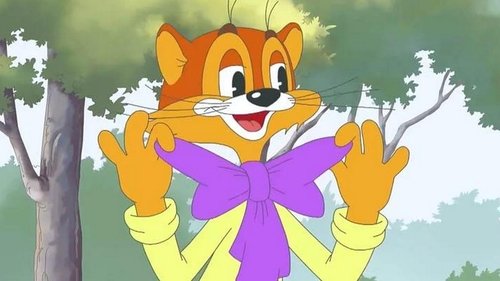
Soviet television had an animation studio of its own, called Ekran, and thirteen of its cartoons are listed. Its most famous creation is Leopold the Cat. Leopold is a ginger cat of mild manners and firm principles who lives alone in a tidy flat, wears a bow tie, and asks only for a quiet life. Two mice, one grey and one white, devote their days to tormenting him, with buckets, catapults and elaborate machines; every plan comes back upon their own heads; and every episode ends with Leopold forgiving them and repeating the sentence that every Russian speaker knows, an invitation to live together as friends. Two of the individual films, Leopold the Cat Asleep and Awake and Leopold the Cat's Polyclinic, have pages of their own.
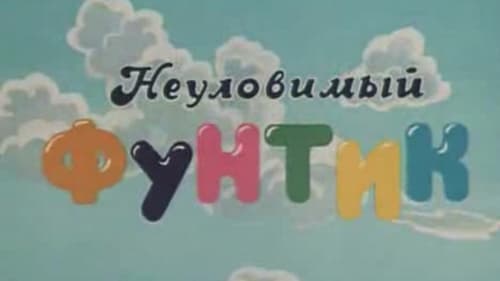
The Elusive Foontic and Foontic and the Detectives belong to a four-part serial about a kind-hearted piglet who runs away from the owner of a toy shop because she makes him trick children out of their pocket money. He takes refuge with a travelling circus, and is pursued across the country by two bumbling detectives; the songs are still sung. Investigation Held by Kolobki. The First Investigation and its sequel are puppet films about two small round detectives who work at a bureau of good deeds. Moomintroll and the Comet is a stop-motion version of the Finnish tale, made with felt figures of great character.
Dunno on the Moon, made in the 1990s, is a serial in twelve parts from the famous children's novel about a boastful little fellow in a wide blue hat who stows away on a rocket; it is as much a comedy about how money works as it is an adventure, and remains a favourite with adults who met it as children. Dunno and Barrabass is a later feature with the same hero.
Poets, puppets and paper
One of the pleasures of this cinema is its variety of materials. The Soviet studios had whole departments for puppets, and their films have a texture that drawing lacks. Ball of Wool is a marvel: an old woman finds a ball of yarn in the snow and begins to knit, and everything she needs, a sheep, a house, a husband, comes off her needles, until she wants too much. Big Underground Ball, from a tale by Hans Christian Andersen, sets a troll wedding inside a hill. About the Gnome Which Left the Home is about a gnome whose own little house is afraid of the dark. An Unusual Concert films the celebrated show of the Moscow puppet theatre, a parody of every kind of stage act.
The poets of children's verse supplied many stories. Korney Chukovsky wrote the poems behind Telephone, Fedora's Sorrow, in which the pots and pans of a slovenly old woman walk out on her, and Miracle-Tree, and From Two to Five is drawn from his famous collection of the sayings of small children. What Is Good and What Is Bad comes from a poem that every Russian child has had read aloud. A Box With Secret takes an old tale about the town inside a musical box and turns it into a bright, strange, musical film in the pop style of the 1970s.
The republics had studios too. Who Will Tell A Fable? is by the Armenian director Robert Sahakyants, whose films are wild, fast and endlessly inventive: a king promises half his kingdom to anyone who can tell him a story that he will admit is untrue. Pomor True Story draws on the tales of the fishermen of the White Sea, told in their own northern speech. Farewell on the Ice Floe, from Ukraine in 1938, shows polar bears and walruses seeing off the members of a famous Arctic expedition.
A few films teach. In Kolya, Olya and Archimedes two schoolchildren are carried to ancient Syracuse and learn about levers from the man himself. Our Friend Read'n'Write is a comedy of a boy who falls out with a letter of the alphabet. Murzilka on the Satellite sends the yellow, beret-wearing reporter of a children's magazine into orbit, and Scary Story shows a gopher and a hamster frightening each other so thoroughly at bedtime that neither can sleep.
Prague and Budapest
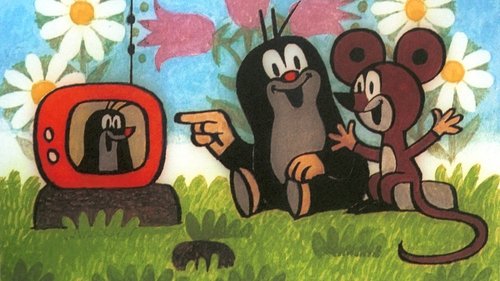
Eleven cartoons come from Czechoslovakia and Hungary, and one of them is among the most famous in the world. The Adventures of the Mole began in 1957 with a film in which a small mole, wishing for a pair of trousers with large pockets, learns from the flax plant, the spider and the ants how cloth is made. Its creator, Zdeněk Miler, went on to make some fifty films about the Mole over nearly half a century. After the first, they are almost wordless, with only laughter, sighs and exclamations recorded by the director's small daughters, and so they have been shown, unchanged, in more than eighty countries. The Mole meets a car, a rocket, a telephone, an umbrella and a lollipop, and greets each with the same wide-eyed delight.
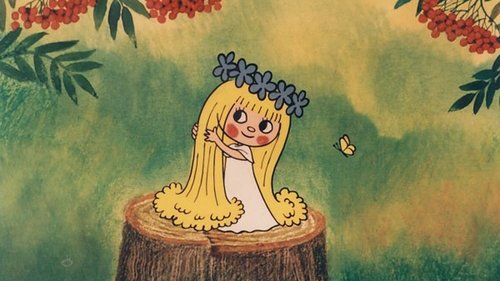
Czech children's television has a much loved tradition of the bedtime story, a short film shown every evening at the same hour, and several of its heroes are here. Bob a Bobek – králíci z klobouku are two white rabbits who live in a magician's top hat; one is large and bossy, the other small and lazy, and every morning begins with exercises. Amalka the Fairy is a forest sprite born of the morning mist, who dances in the meadows and helps the animals. Jája and Pája are two boys who spend their days with a retired sailor and his remarkable inventions.
Karel Zeman for Children is a gift: the great pioneer of trick film, then seventy, gathered scenes from thirty years of his fantasies into one programme for young viewers. The Millionaire Who Stole the Sun, from 1948, is a fable about a rich man who wants the daylight for himself alone. Two short films by Jan Švankmajer, Natural History Suite and Et cetera, show the playful side of an artist best known for stranger things; they are brief, wordless experiments with pictures and rhythm, better suited to older children and adults. The newest Czech titles, Suzie in the Garden and Red Shoes, are painted on glass, a method of rare beauty in which each frame is made by reworking the last. From Hungary comes Raven and Fox, the old fable drawn in sand by Ferenc Cakó, whose hands can be seen at work.
France and Belgium
Twenty-five titles are in French. The oldest is The Magic Roundabout, which began in 1964: a garden, a roundabout, a girl named Margote, a shaggy dog who loves sugar, a snail, a cow and a rabbit, all moving in stop-motion on a plain white ground. It was shown just before the evening news, five minutes at a time, and its dry humour made it as popular with adults as with children. Chapi Chapo, from 1974, is simpler still, two small figures in big hats playing with coloured cubes. Barnaby tells the story of a little bear who longs to sing and to see the world; it was animated with puppets in Poland for French television and is known in other countries under other names.
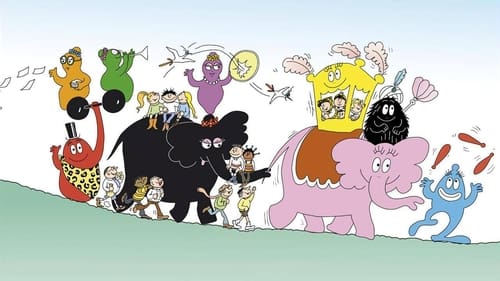
Barbapapa needs little introduction. Born in a garden, pink, round and able to change into any shape that is needed, a boat, a staircase, a tent, he meets Barbamama, who is black and elegant, and together they have seven children of seven colours and seven talents. The books appeared in 1970 and the series in 1974, and its gentle concern for animals and for the natural world was ahead of its time. Zoom the White Dolphin, from 1971, is about two children on a Pacific island and the dolphin who is their friend, and Tip en Tap about two puppies who get into scrapes.
The 1980s and 1990s brought new ambitions. Ciné si is the series in which Michel Ocelot, later famous for his feature films, perfected his art of black paper silhouettes against glowing colour: in an abandoned cinema, a boy, a girl and an old technician invent a new story each evening and act it out. Insektors, from 1994, was among the very first series made entirely by computer; its war of colour between the cheerful insects of a flower city and the gloomy ones of a stump won an international Emmy. Michel Vaillant puts a famous comic-strip racing driver on the track, and Chris Colorado and Les énigmes de providence are adventure serials for older children.
More recent French and Belgian work includes Little Nick, from the classic stories of a mischievous schoolboy and his friends; The Tofus, a comedy about a family who have moved to the country to live naturally, to the despair of their two children; Wakfu: The Quest for the Six Eliatrope Dofus; Miraculous Chibi, short comic episodes with the heroes of a worldwide hit drawn small; and Mystery Lane, in which a young hamster and his sister solve puzzles in London. A Town Called Panic: Back to School Panic! and A Town Called Panic: The Summer Holidays are two specials from Belgium in which plastic toy figures, Cowboy, Indian and the long-suffering Horse, charge through adventures of glorious silliness.
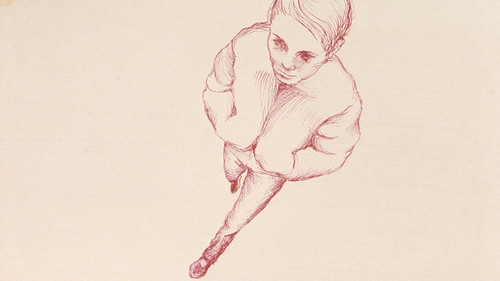
Three short films stand out. Vanille follows a girl from Paris to her aunt's house in Guadeloupe, where she discovers the island's stories and learns to love her own curly hair. Dounia: The Great White North is about a Syrian girl and her grandparents settling in Canada. And in Maya, Give Me a Title the film director Michel Gondry, living far from his small daughter, asks her each evening for a title and sends her back a cut-paper film in which she is the heroine. Walking, made in Canada in 1968 by Ryan Larkin, is five minutes of people simply walking, drawn in line and wash, and one of the most admired animated shorts ever made.
Spain, Germany and Italy
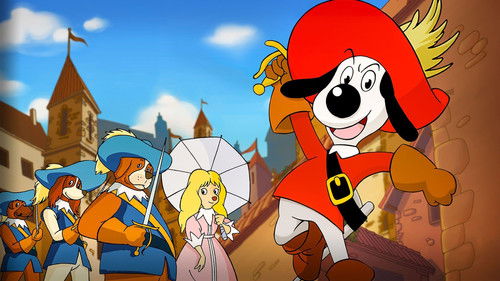
Thirteen titles come from the south and centre of Europe, and three of them are the great adventure serials that the Madrid company BRB made in the 1980s with animators in Japan. Dogtanian and the Three Muskehounds retells the novel of Alexandre Dumas with a cast of dogs: young Dogtanian leaves his village on a yellow horse to join the royal guard in Paris, makes three inseparable friends, falls in love with Juliette, and crosses swords with the agents of the Cardinal. Its theme song is unforgettable, and the story is told faithfully across 26 episodes. Around the World with Willy Fog does the same for Jules Verne: an English lion of perfect manners bets that he can circle the globe in eighty days, and sets out with his servant, a nimble cat who was once a circus performer.
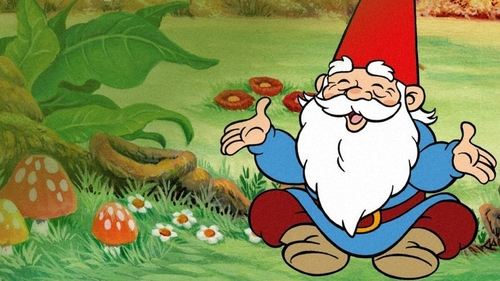
The World of David the Gnome is drawn from a beautifully illustrated Dutch book. David is a gnome of 399 years, a doctor, who rides a fox through the forests to treat sick animals with herbs and needles, and each episode ends with a word in favour of the natural world. Children of the 1980s in a dozen countries remember it with love, and its final episode with a tear. Mofli, the Last Koala is an adventure with a message about protecting wildlife. Cantinflas Show puts the great Mexican comedian, in cartoon form, into short lessons on history and science. Sandra, The Fairytale Detective is a modern series in which a girl and her elf assistant investigate what has gone wrong in the stories everybody knows.
From Germany comes a national treasure, Jim Button and Luke the Engine Driver. It is performed with string puppets by a famous theatre company from Augsburg, which filmed the story by Michael Ende in colour in 1977: a baby arrives by post on a tiny island with two mountains, grows up beside a locomotive named Emma, and sets off with her driver across a sea made of rippling plastic sheet. Germans of every age can sing the song about the island. Benjamin the Elephant is the gentle, talking elephant of the Newtown zoo, hero of the country's most popular children's audio plays. Ferdy The Ant, from Czech picture books, is a resourceful ant with a red spotted scarf. And The Golden Goose, from 1944, is a silhouette film by Lotte Reiniger, who cut her figures from black paper with scissors and had made the first animated feature in Europe twenty years earlier.
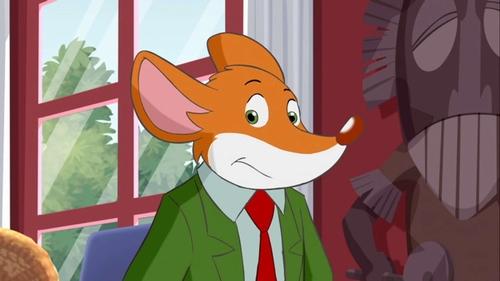
Italy contributes La Pimpa, a white dog with red spots drawn by the cartoonist Altan, who talks to the table, the alarm clock and the moon; and Geronimo Stilton, the mouse who edits a newspaper and would far prefer to stay at home.
Russian animation today
Twenty-four titles were made in Russia since 1992, and they show an industry that has rebuilt itself around television series for young children. Kikoriki are Making a Movie, Kikoriki and friends in the movies. Issue 1 and Kikoriki: The ABC's of Safety feature the round animal friends, a rabbit, a hedgehog, a ram, an owl and the rest, of a series shown in dozens of countries; the last teaches road sense and care around the house. Kid-E-Cats and a Sea of Adventures takes three kittens and their parents to the seaside. The Barkers Team is about a family of dogs with five puppies. Tommy the Little Dragon is for the very youngest.
For slightly older children, Fantasy Patrol and its film Fabulous Patrol. The Show Continues follow four young sorceresses who keep the peace between the everyday world and the creatures of Russian fairy tales, and The Princesses and the Mysterious Guest is set at a school for the daughters of storybook kings. Heroes of Envell sends four classmates inside a computer game. Ivan Tsarevich & the Grey Wolf 6 is the latest of a hugely popular series of comic fairy-tale features. I'll Get You! Holidays brings back, in a new style, the wolf and the hare of the most famous Soviet chase cartoon, now more rivals in sport than hunter and hunted, and Chebi. Day Off is a short film with the big-eared hero of a recent hit.
The art of the short film continues as well. Merry Grandmas! is a painted film about a girl of eight who is left with her grandmothers on New Year's Eve and finds that they know how to celebrate. Once Upon A Time There Was A House is about a house that welcomed everyone. How The Bear Was Looking For a Friend comes from Belarus. And Hoffmaniada, a full-length puppet film on which the artists of Soyuzmultfilm worked for many years, weaves three tales by the German romantic writer Hoffmann into the story of a young clerk who dreams of being a musician; it is for older children and adults who love craftsmanship.
Animal stories
Seventy-four cartoons have animals as their heroes, and the list is the best place to begin with children under seven. Cats are everywhere: Leopold, the kitten of Lizyukova Street, A Naughty Kitten who runs away into the forest, Greedy Kuzma, who grabs every tasty morsel for himself, Cat and Clown, and the proud lady of Cat House. Bears come next, with Little Stomper, the Bear Cub of the Butyrin films and Barnaby. The hippopotamus has a small tradition of his own, in Little Hippo, who looks for a friend, A Teacher of Singing, in which a hippo takes lessons and the teacher loses his voice, and the famous patient who was afraid of his inoculation.
How the Donkey Sought Happiness follows a donkey who loses his memory when an apple falls on his head. The Pony Runs in Circles is about a pony in a park who gives rides to children and dreams of being a real horse. A Bragging Ant is blown far from home and must get back before the anthill closes for the night. The Firefly goes looking for its place in the world. A Live Toy teaches a small girl the difference between a baby rabbit and a plaything, and The Tale of the Old Echo is about a fox cub and his father's old friend, the echo of the forest.
From outside Russia, the animal heroes include the Mole, the white dolphin, the rabbits in the hat, Ferdy the ant, Pimpa the spotted dog, Benjamin the elephant, the hamster detective of London and every single character in Dogtanian and Willy Fog.
Fairy tales
Forty-eight cartoons are fairy tales, and they come from many traditions. The Russian tales include Frost Ivanovich, in which two sisters, one hard-working and one idle, each spend a day in the house of the old man who makes the winter; The Tale Is Told, with its prince, its captive princess and its deathless villain; and Three Woodcutters, in which a bubble, a straw and a bark shoe go to gather firewood. Pot of Porridge is the tale from the Brothers Grimm of the pot that would keep on cooking, and The Smallest Gnome gives a very small hero a part in several famous stories at once.
New Year Tale is about schoolchildren who go into the forest for a fir tree and meet its guardian, a snow creature with a lisp, who must be persuaded to part with one. Adventures in the Emerald City: Princess Ozma continues the Russian version of the story of the magic land, and Adventures of Alyonushka and Yerema is a comic musical fairy tale of 2008. Secret of the Sukharev Tower. Magician of Balance is set in the Moscow of Peter the Great, where the daughter of a learned man and a boy from the streets guard a book of secrets.
The French tradition is represented by the silhouettes of Ciné si, and the German by The Golden Goose. And Sandra, The Fairytale Detective turns the whole business on its head, with a heroine who must work out why the wolf has stopped chasing the pigs or why the glass slipper fits everyone.
Watching with children
A few practical notes may help families. Most of the Soviet short films were made for children between four and ten, and are safe and kind. One or two classics have moments of real feeling: the fire in Cat House, the worry in Mama, the last wish in The Last Petal. They were made by people who believed that children can cope with emotion, and they are best watched together the first time.
The films with little or no speech, the Mole above all, can be followed with subtitles switched off, and are ideal for the very young and for households where more than one language is spoken. For films with dialogue, the official services listed by JustWatch usually offer English subtitles, and a good many of the Soviet classics have been restored and published by the studio itself on free official channels, often with subtitles in several languages. It is worth looking at the free column first.
The series vary in length. The adventure serials from Spain run to 26 episodes of about 25 minutes and are best watched in order, a chapter a night. The French and Czech bedtime series have episodes of five to ten minutes and can be watched in any order. The label on each still on the home page shows the number of episodes or the running time, so that bedtime holds few surprises.
Music and song
European cartoons were made with orchestras. The Soviet studios employed some of the finest composers in the country, and the songs written for ten-minute films became part of every childhood. Chuchelo-myauchelo is built around a song about a cheerful scarecrow of a cat, Red, Red, Freckled around a song that every teased child has taken as an anthem, and The Boatswain and The Parrot around sea shanties. A Box With Secret is close to a concert film, its story told almost entirely in music. In A Teacher of Singing the joke is the music itself, and An Unusual Concert is a whole evening of comic turns.
The serials have their themes too. Children across Europe could sing the opening songs of Dogtanian and the Three Muskehounds, Around the World with Willy Fog and The World of David the Gnome in their own languages, since each country recorded its own version, and the tune of The Magic Roundabout on its fairground organ is recognised within two notes. The films of the Mole are held together by music of great delicacy, which stands in for speech.
Decade by decade
Watching in order of date shows how the art changed. The cartoons of the 1930s and 1940s on B98, Cat House, The Three Musketeers, Telephone and The Golden Goose, are in black and white or early colour, and have the springy movement of their time. The 1950s are the age of the fairy tale told with full, careful drawing: A Hazel Tree Twig, Dog and Cat, The Stork and the first film of the Mole all belong to it.
The 1960s bring the modern look, flat and bright, in Little Stomper, About the Hippopotamus Who Was Afraid of Inoculations and The Magic Roundabout, and the experiments of Walking and Ball of Wool. The 1970s, with 33 titles, and the 1980s, with 38, are the richest decades in the collection, the years of The Last Petal, Barbapapa, Leopold the Cat, the Spanish serials and the Foontic films, when a new cartoon was an event in every household with a television set.
The years since 1990 are the years of the computer. Insektors was a pioneer, and most of the newer series here were made on screens. Yet the hand-made film has survived, as Hoffmaniada, Suzie in the Garden and Maya, Give Me a Title show, and it is one of the pleasures of a collection like this to move in an evening from a puppet of 1968 to a painting on glass of 2022 and to find the same care in both.
Cartoons that teach
Twenty-one titles are listed under Learning. European public television has always believed that a cartoon may instruct while it amuses, and some of the results are charming. Kolya, Olya and Archimedes, Our Friend Read'n'Write and What Is Good and What Is Bad have been mentioned. Castle of Liars cures a boy of telling tales by showing him a place where nobody tells the truth. Unwantie takes a boy who wants only to be idle to a land where his wish is granted in full, and he is soon very bored indeed.
Cantinflas Show covers the great events of history in five minutes apiece. Kikoriki: The ABC's of Safety is as useful as its title suggests. And the adventure serials teach in their own way: many children first met the geography of the world in the company of Willy Fog, the France of the musketeers with Dogtanian, and the plants and animals of the northern forest with David the Gnome.
The artists
Animation is the most personal of the film arts, since every frame is made by hand, and it is worth knowing a few names. Ivan Ivanov-Vano began drawing films in the 1920s and was still directing in the 1980s; his love of folk art, of painted wood and embroidery, shaped the Russian fairy-tale film. Lev Atamanov made the studio's most elegant features and shorts in the 1950s. Fyodor Khitruk, who began as an animator of great skill, became in middle age the director who modernised the whole tradition, and trained many of those who came after.
Roman Kachanov gave the puppet film its warmth. Leonid Amalrik and Vladimir Polkovnikov were masters of comedy. Vyacheslav Kotyonochkin, who made Kitten from Lizyukova Street, is known to every Russian as the director of the long chase between a wolf and a hare. Aleksandr Tatarskiy, represented here by Pilot Brothers Cook Pasta for Breakfast and the opening song of a famous children's programme, brought a new, rubbery, anarchic humour in the 1980s and founded the first independent studio in the country.
Outside Russia, Zdeněk Miler drew the Mole for fifty years. Karel Zeman combined actors, puppets and engravings in films that influenced directors around the world. Lotte Reiniger cut silhouettes in Berlin, London and elsewhere for six decades. Michel Ocelot of France took up her art and carried it into colour. Serge Danot built his roundabout in a small studio near Paris, and Annette Tison and Talus Taylor, an architect and a teacher, invented Barbapapa at a café table. Each of them worked with a small team, and each made something that has outlasted far more expensive films.
Using B98
The site keeps the bright look of the one it is named for. The yellow header carries the name in black and red and the search box; the deeper yellow bar beneath holds the menu in capital letters. Cartoons opens the full list of films and short films, Series the 39 serials, and Studios every list on the site: the two Moscow studios, the countries, the kinds and the decades. Type a title in the search box and matches appear as you type; original titles in Russian, Czech, French and Spanish are recognised as well as the English ones.
Every cartoon has a page of its own. At the top are the picture, the title in English and in its original language, the year, the running time or the number of episodes, and the genres. Below come the story and the names of the director and the studio. The Watch now button sits beside the picture. Choose your country from the list, press the button, and JustWatch opens with the services that carry that cartoon where you live: subscription services, shops for rental and purchase, and free services supported by advertising.
My List is the place for cartoons you have noticed and would like to keep for a rainy afternoon. The Add to My List button on each page stores the title in the browser you are using; the My List link in the menu bar shows them all, and a button there writes the list to a small file that can be moved to another device. The list belongs to your browser alone, and there is neither an account to open nor a password to recall.
A first month
For a family new to these cartoons, here is one way to spend four weeks, a little at a time.
In the first week, meet the Mole. Any three or four of The Adventures of the Mole will do, and the youngest viewers will ask for them again. Add Little Stomper and Little Hippo for bedtime.
In the second week, try the Soviet classics. Watch The Last Petal together, then Kitten from Lizyukova Street and The King's Sandwich, and let Leopold the Cat and his two mice fill the gaps.
In the third week, begin a serial. Dogtanian and the Three Muskehounds and Around the World with Willy Fog each give a month of evenings at one episode a night, and older children will want to read the books afterwards.
In the fourth week, look at the art. Ciné si and The Golden Goose show what scissors and black paper can do; Ball of Wool what can be done with yarn; Suzie in the Garden with paint on glass; and Walking with a pencil and a patient eye. Then let everyone choose a favourite to watch again.
After that the lists are yours to explore. The Top rated list holds the cartoons with the highest scores from viewers; the decade lists let you move from 1938 to the present; and the Short films list, with 90 titles, will supply a story before bed for three months.
How the cartoons were chosen
Every title on B98 was selected by a person and checked by hand. The starting point was the record of animated films and series in Russian, Czech, French, German, Italian, Spanish and Hungarian held by TMDB with a picture, a still image and a written description, which gave some eight hundred candidates. From that list we set aside the many animated films made for adult audiences, films with frightening or cruel content, and pieces made as propaganda. Serials of more than 120 episodes were left out as well. We then read the description of each remaining title, kept the ones a family could watch together, and looked a second time at any that raised a doubt.
The result has a clear character: 77 Soviet classics and 24 newer Russian cartoons, 25 from France and Belgium, 11 from Prague and Budapest and 13 from Spain, Germany and Italy; 111 films and shorts and 39 series. Each appears on B98 alone among our sites, so the catalogue is its own. Pictures and descriptions come from TMDB, and the Watch now links are provided by JustWatch, which records where each title is officially available country by country.
Questions and answers
Questions
What is B98?
B98 is a guide to 150 classic and family cartoons from Europe, made between 1938 and 2026 and chosen for the whole household. Each page gives the story, year and studio, and a Watch now button that leads to the official services carrying the cartoon in your country.
Which cartoon should I watch first?
Start with The Adventures of the Mole, Leopold the Cat or The Last Petal. The first-month plan in the guide suggests an order.
Is the catalogue suitable for small children?
Yes. Every title was screened by hand, and the selection keeps to fairy tales, animal stories, comedies and adventure serials made for children and families.
Do the cartoons need subtitles?
Many of the short films have very little speech and can be followed in any language. For the others, most official services offer English subtitles.
What is Soyuzmultfilm?
It is the Moscow animation studio founded in 1936, for decades the largest in Europe. Sixty-three of its cartoons have a list of their own on B98.
How long are the cartoons?
Ninety are short films of thirty minutes or less, and many last about ten minutes. The label on each still shows the running time or the number of episodes.
How does My List work?
Press Add to My List on any cartoon page. The list is kept by your own browser, free of charge, and the My List link in the menu bar opens it.
Does B98 host cartoons or downloads?
B98 is a guide only. Every Watch now button leads to an official, licensed service.
